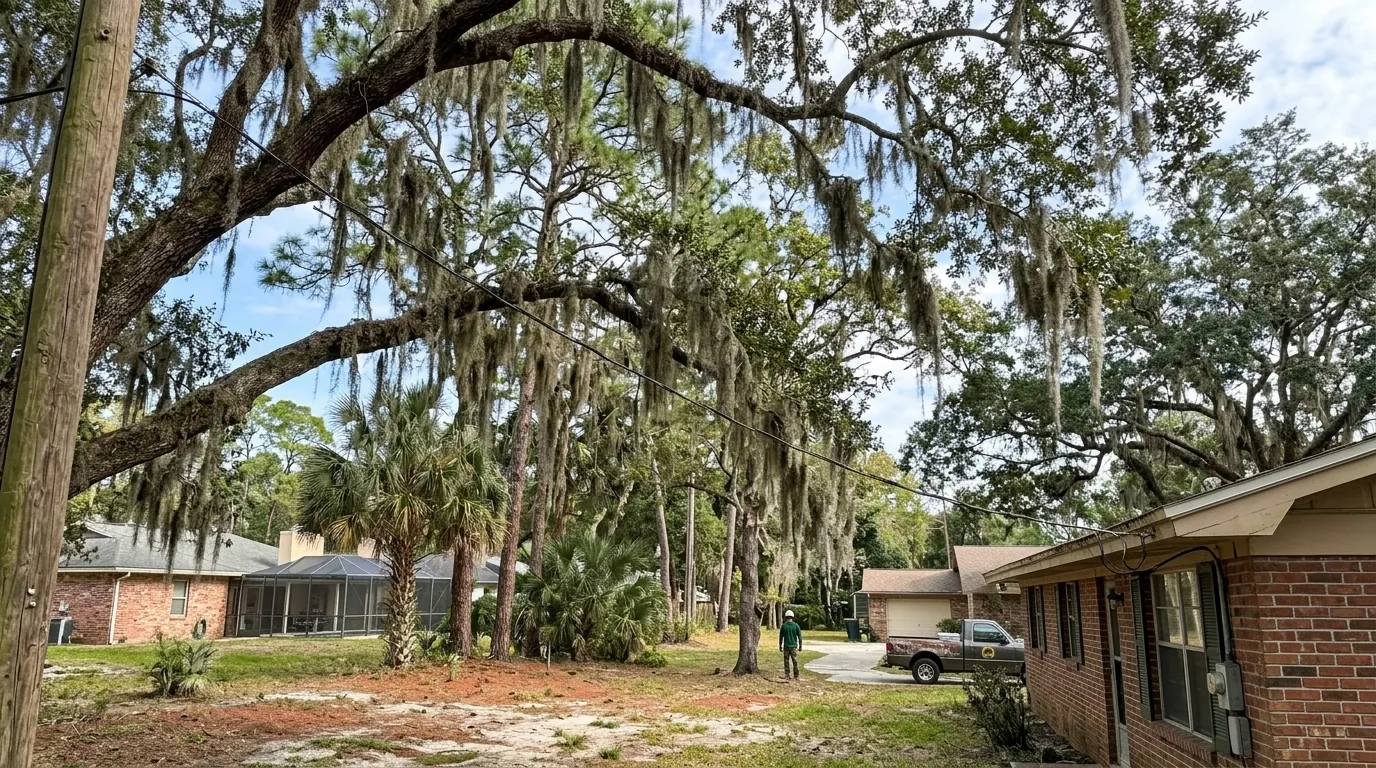
Tree on the house?
 Not on the list?
If a large oak has come down in your neighborhood in the last few years, there's a good chance it was a laurel oak. That's not bad luck. It's the way the species is built. This post covers what UF/IFAS Extension says about laurel oak, how to tell it from a live oak, the signs of decay worth acting on, and what your options are.
Laurel Oak Life Span in Gainesville: Fast Growth, Short Life
UF/IFAS describes laurel oak (Quercus laurifolia) as a large, fast-growing shade tree that reaches 60 to 70 feet with a 35 to 45 foot spread. Its fact sheet gives it a life span of 50 to 70 years and notes that trunks and large branches often hollow from decay and wood rot. It also says the species hollows with age as it approaches 50.
Quick shade is a big part of why laurel oak became so common in yards and along streets. The tradeoff is wood that breaks and decays more easily. A tree that went in when a subdivision was built in the 1970s is now right in the window where decay usually shows up.
How Decay Starts Inside Gainesville Laurel Oaks
The UF fact sheet says the smallest trunk injury or a poor pruning cut can start a column of decay inside the trunk that runs 10, 20 or more feet. The outside can look normal for years while the center softens.
Common starting points in local yards include:
- Old flush cuts or stubs where large limbs were removed years ago
- Lawn mower and string trimmer wounds at the root flare
- Roots cut for driveways, irrigation, sewer laterals or additions
- Storm tears where a limb ripped bark down the trunk
- Topping cuts that left big stubs high in the crown
Live oak handles the same wounds much better. A UF/IFAS publication on Ganoderma decay fungi notes that live oak resists decay because it makes dense wood with antimicrobial chemicals and walls off infections, while laurel oak is less efficient at fighting fungal infections and is more susceptible to decay.
Laurel Oak or Live Oak? How to Tell in a Gainesville Yard
The two are easy to mix up because both keep green leaves for most of the year here. A few differences help:
| Feature | Laurel oak | Live oak |
|---|---|---|
| Leaves | Narrow, smooth and shiny on both sides, 3 to 5 inches | Dark glossy green on top, paler underneath, 2 to 5 inches |
| Leaf habit | Semi-evergreen; leaves turn brown and drop over fall and winter | Evergreen to semi-evergreen |
| Size and shape | 60 to 70 ft tall, 35 to 45 ft spread, oval crown | 60 to 80 ft tall, 60 to 120 ft spread, long sweeping limbs |
| Wood | Fast-growing, rated susceptible to breakage | Very dense, rated resistant to breakage |
| Typical outlook | Plan for decline after about 50 years | Can live for centuries with good care |
Those numbers come straight from the UF/IFAS fact sheets for each species. Water oak is the other common short-lived oak in Gainesville yards and shares many of the same decay problems.

Laurel Oak Warning Signs Gainesville Homeowners Can Spot
None of these alone means a tree is about to fall. Together, or near a house, they are worth a closer look.
- Mushrooms or shelf-like conks at the base. UF/IFAS describes laccate Ganoderma as shiny, reddish-brown, shelf-like fruiting bodies on the lower trunk, root flare or roots. Their presence means wood decay is active, though it does not always mean failure is imminent.
- Hollow sound or cavities. Openings at the base, woodpecker holes in the trunk, or a hollow sound when the lower trunk is tapped with a mallet.
- Dead limbs high in the crown. Large dead branches that stay attached and drop in pieces.
- Cracks and seams. Long vertical cracks, especially where two trunks meet in a tight V.
- A thinning or lopsided crown. Sparse leaves on one side can point to root problems on that side.
- New lean or lifted soil. A tree that has started leaning, or soil heaving on the side away from the lean, needs attention right away.
A five-minute walkaround you can do yourself
- Start at the base. Pull back mulch or leaves and look at the root flare for conks, soft wood, or cracks where the trunk meets the ground.
- Walk all the way around the trunk. Look for openings, seams and bark that sounds or feels loose.
- Step back to the edge of the canopy and look up. Count big dead limbs and note which way they hang.
- Check the ground on every side for lifted soil, new cracks in the lawn, or roots that have recently snapped.
- Note what's under the tree: bedrooms, the driveway, a play set, the neighbor's carport.
- Take photos from the same spots once or twice a year so you can compare.
What a professional inspection adds
From the ground, a trained eye can sound the trunk with a mallet, probe soft spots, identify the fungus, and judge how much sound wood is likely left around a cavity. We also weigh what the tree could hit if it failed. That target question matters as much as the defect: a decayed laurel oak at the back of an empty lot and the same tree over a nursery are two very different decisions. Written hazard notes are available on request with any estimate.
Laurel Oaks in Gainesville Storms
UF/IFAS studied tree survival after a series of hurricanes and published relative wind resistance lists for southeastern coastal plain species. Laurel oak and water oak are in the lowest wind resistance group. In a comparison across four Florida Panhandle hurricanes, laurel oak survival was significantly lower than live oak and sand live oak, and in Hurricane Ivan laurel oaks lost more than a quarter of their branches on average.
Wind resistance is only part of it. Saturated sandy soil after a slow storm lets a decayed root plate let go even in moderate wind. That's why a laurel oak with base decay is a higher priority before storm season than a sound tree of the same size. Our post on pruning live oaks before hurricane season explains how the approach differs for the tougher species.
Gainesville Laurel Oak Options: Prune, Monitor or Remove
There are three honest answers, and the right one depends on the tree's condition and what it could hit.
Prune and keep it
A younger laurel oak with sound wood benefits from regular light pruning. UF recommends keeping branches smaller than half the trunk diameter and pruning often enough that only small branches are removed, which may extend the tree's life. Removing dead wood and reducing long, heavy limbs lowers the load. See tree trimming and pruning.
Monitor it
An older tree with minor defects over a low-use area, like the back corner of a large lot, can often be watched. A tree health check once a year, plus a look after every major storm, is a reasonable plan.
Remove it
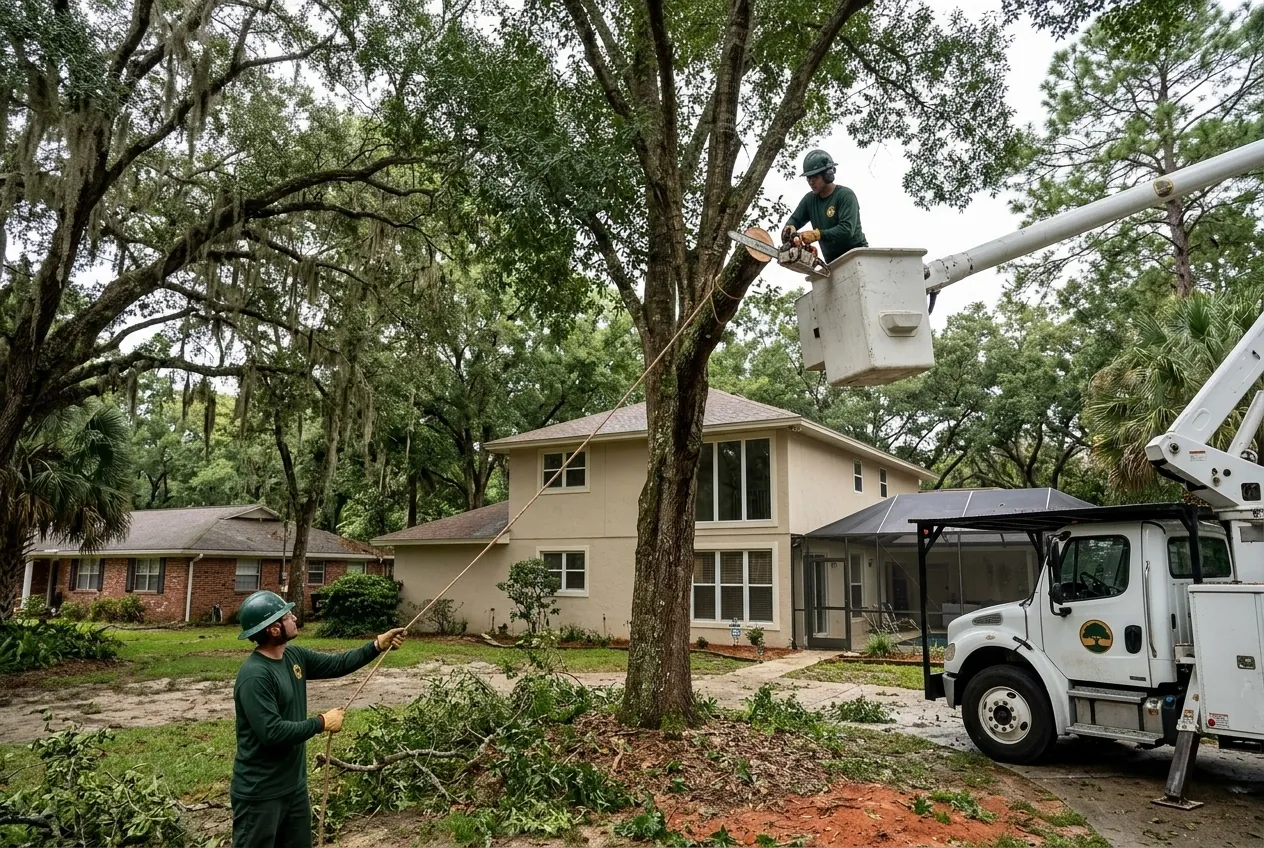
A laurel oak with active base decay, a large cavity, or a lean toward a house, driveway or play area is usually a removal. Our oak tree removal crews section hollow trees down carefully, often from a bucket truck or with a crane, because a climber shouldn't tie into decayed wood. Typical laurel oak removals run $900 to $3,200 depending on size and what's underneath.
Why we rarely cable a decaying laurel oak
Cables and rods work by tying sound wood together. In a laurel oak with a hollow trunk or rot at the base, the anchors have nothing solid to hold, and the failure point is often down at the roots where no cable can reach. We'll suggest cabling on a laurel oak only when the wood is sound and the problem is a single weak fork.
Laurel Oak Rules and Replanting in Gainesville
Laurel oak has a higher permit threshold than most trees. Inside the city, it becomes a heritage tree at 30 inches in diameter, and unincorporated Alachua County also uses 30 inches for laurel and water oaks. Many yard laurel oaks are under that, but big old ones aren't. Check our permit guide before scheduling.
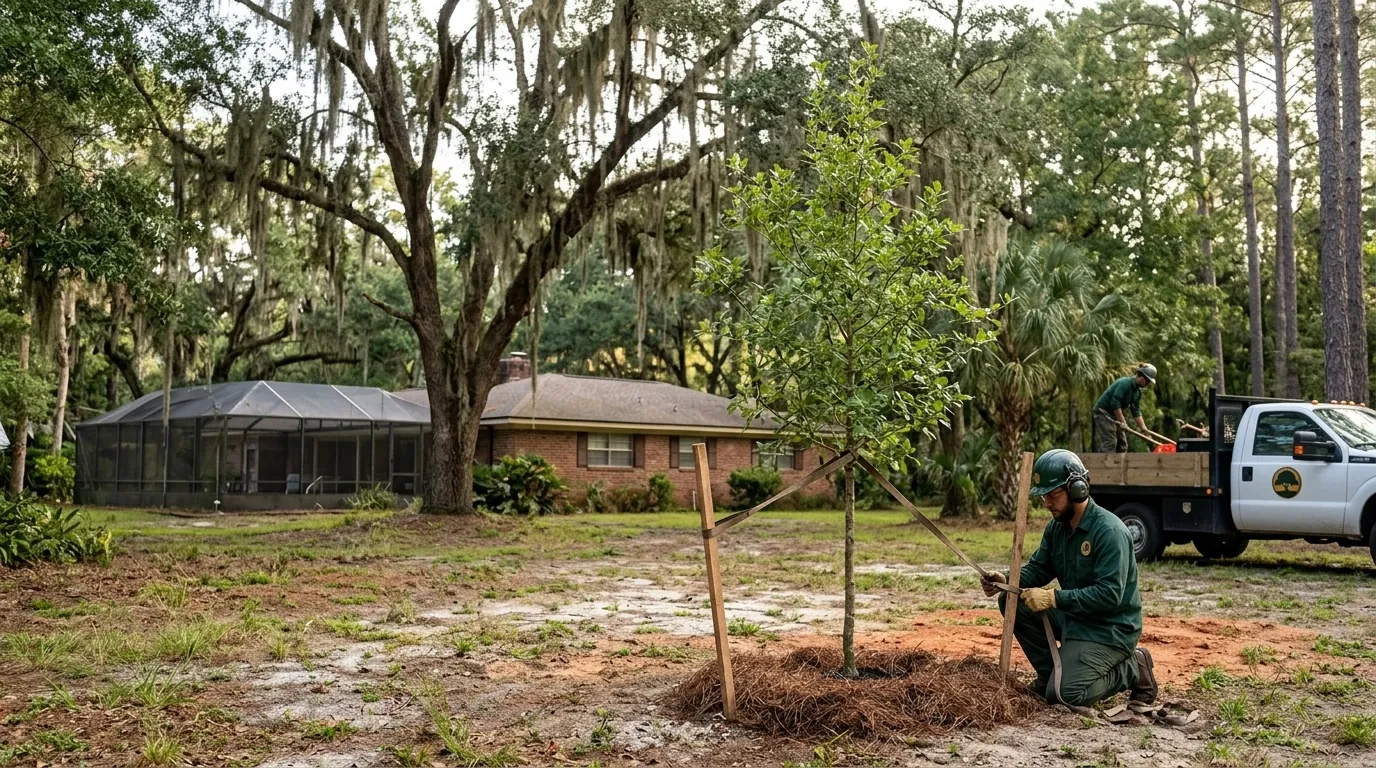
When a laurel oak comes out, replace it with something that will last. UF/IFAS lists live oak, Shumard oak and southern red oak among the more durable choices, and our replanting guide covers species that fit Gainesville lots.
Where Laurel Oak Problems Show Up Around Gainesville
Laurel oaks grow throughout the county, but the calls tend to come from neighborhoods where many trees were planted at once or where older homes sit under large canopies. A typical case in Northwood or Huntington is a tall laurel oak near the house with a few dead limbs and a conk at the base. We look at the whole tree, sound the trunk, and give you a written recommendation. If it can wait, we'll say so.
For a wider look at what we do across town, see our Gainesville tree service page, or call or text us to set up a free estimate.